PhD Researcher · UC Irvine

Saba A. Farahani

Trustworthy AI for Personalized Health

  • AI Agents
  • Multimodal Learning
  • Causal AI
  • Knowledge Graphs
  • Evidence Verification

I design and build AI systems that connect wearable signals, clinical data, and domain knowledge to understand individual health, identify meaningful events, and verify the evidence behind AI-generated responses. My research advances personalized health agents toward traceable, verifiable actions.

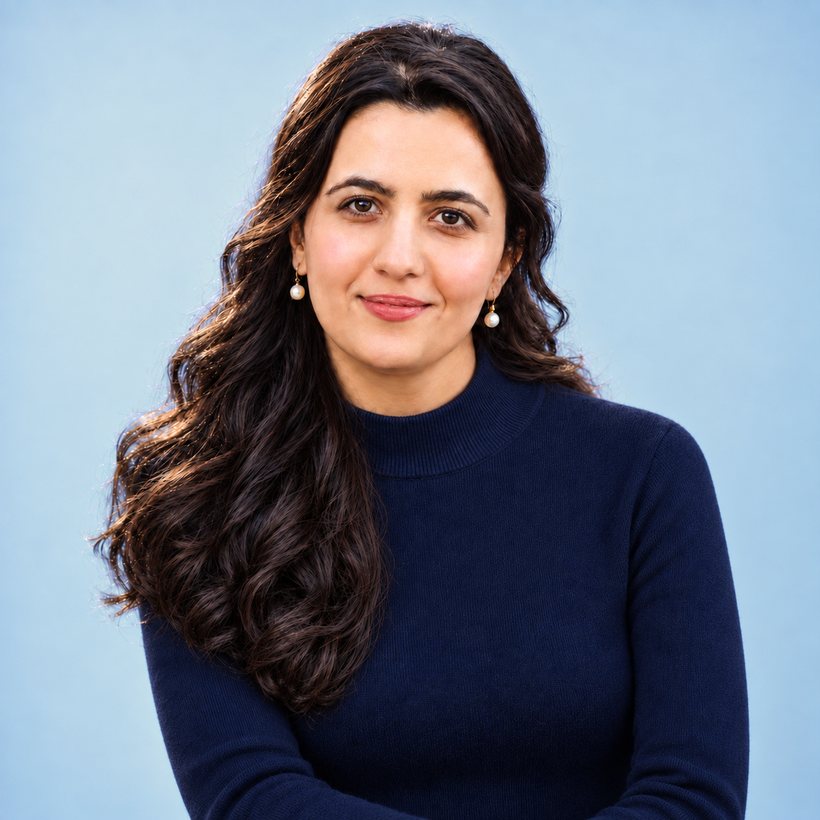
Portrait of Saba A. Farahani
Saba A. FarahaniIrvine, California

Research & industry

  • UC Irvine · Institute for Future Health
  • UCI School of Nursing
  • Hyundai Motor Company
  • NaviGait

What I build

Agents that understand the person,
and show their evidence

A connected research agenda: personalization, multimodal understanding and event mining, and verifiable responses and actions.

Personalized health agents

Knowledge-guided LLM agents that identify missing patient context and ask targeted questions before answering; ongoing multi-agent research on Personal Care Utility for type 2 diabetes.

5 LLMsevaluated on diagnosis and dietary safety
Paper & code →

Wearable & multimodal data

Event-graph mining across wearable and physiological signals and clinical reports; interpretable, physiology-guided causal modeling.

2,365participants across two cohorts
Paper →

Evidence verification

Evidence gates that check LLM health responses against a clinical–lifestyle knowledge graph, then verify or revise them.

100structured type 2 diabetes cases (T2D-Bench)
Paper & code →

Featured work

Selected projects

Each project is built end to end: data, architecture, implementation, and evaluation.

Patient health queryDetect missing patient contextAsk a targeted clarifying questionMissing context acquiredGrounded responsedownstream LLM uses acquired contextKnowledgegraph
Schematic overview
Preprint · 2026

Knowledge-guided agent for patient-context ambiguity

Problem
Health questions often leave out context an LLM needs to answer safely.
Approach
A knowledge-guided agent detects what is missing and asks targeted clarifying questions before a downstream model answers.
Evaluation
Across five LLMs on diagnosis and dietary safety.
LLM health responseEvidence gatedeterministic checks against explicit requirementsKnowledgegraphEvidence metrequired evidence checkedEvidence missingresponse revisedBenchmark: 100 structured type 2 diabetes cases
Schematic overview
2026

T2D-Bench: evidence-gated evaluation of LLM outputs

Problem
Fluent health answers can still lack the clinical evidence they require.
Approach
A multi-layer clinical–lifestyle knowledge graph and deterministic evidence checks verify and revise LLM responses.
Evaluation
100 structured type 2 diabetes cases.
Sleep & physiological signalsMESA and MrOS cohorts · 2,365 participantsPhysiology-guided causal discoveryInterpretable sleep-recovery frameworkbeyond the apnea–hypopnea index (AHI)
Schematic overview
Causal AI · Physiological signals · 2026

Causal AI for interpretable health modeling

Problem
Standard sleep metrics such as AHI miss much of how people recover.
Approach
Designed and implemented a physiology-guided causal-discovery pipeline for interpretable health modeling, applied to sleep recovery.
Evaluation
MESA and MrOS cohorts totaling 2,365 participants.

News

Recent

  • Developed a physiology-guided causal AI framework; evaluated across two cohorts totaling 2,365 participants.
  • Preprint: knowledge-guided agentic framework for patient-context ambiguity.
  • T2D-Bench: evidence-gated evaluation of LLM outputs for type 2 diabetes.
  • Named co-inventor on a UC Irvine invention disclosure.
  • Best Paper Award, ASME InterPACK.

Recognition

Honors

2024 · ASME InterPACK

Best Paper Award

Predictive modeling for LiDAR sensor reliability, from the Hyundai collaboration.

2026 · UC Irvine

Named co-inventor

UCI invention disclosure: causal AI for personalized health assessment.

Get in touch

Building trustworthy AI for health? Let’s talk.

I’m interested in research roles in health AI, LLM agents, and wearable and clinical data.